
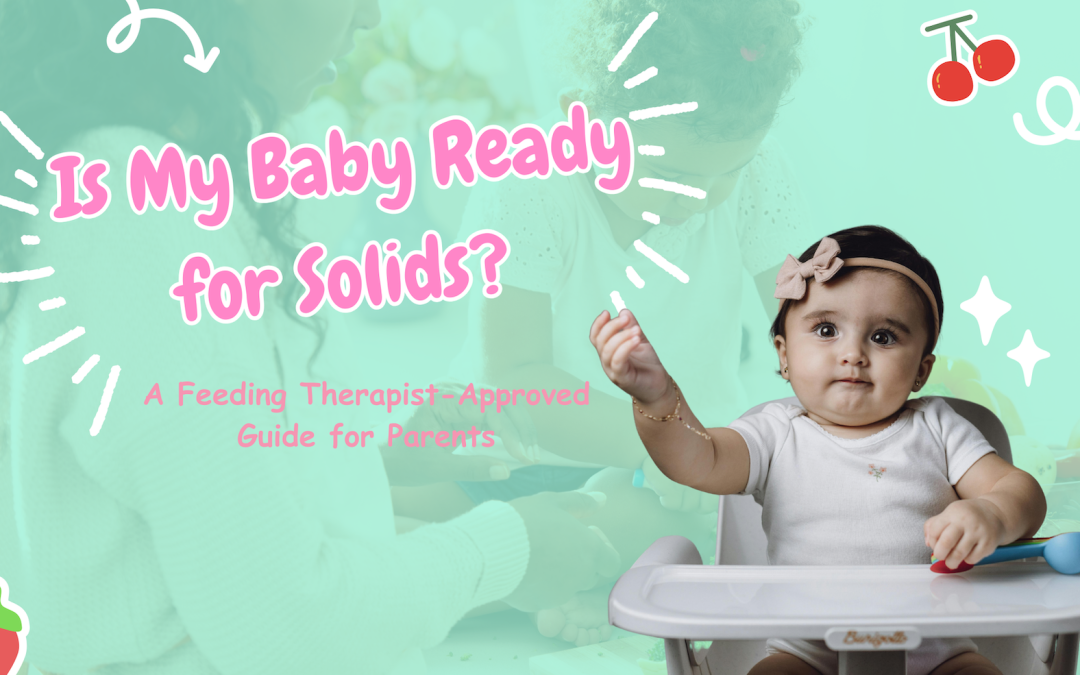
A Feeding Therapist-Approved Guide for Parents
One of the questions we hear all the time from families is:
“When should I start solids with my baby?”
Most people hear “around 6 months,” but here’s the truth: age is just one part of the story. As a team of speech and feeding therapists, we look at more than just the calendar. Readiness for solids is about developmental signs, oral motor strength, and making sure your baby is truly ready to have a safe and successful feeding experience.
✅ What Readiness for Solids Actually Looks Like
Here are the signs we encourage parents to watch for before introducing solids:
1. Baby can sit upright with little or no support
Good posture is key. Babies need trunk control and the ability to sit upright in a highchair to safely manage food.
2. Strong head and neck control
Your baby should be able to hold their head steady and upright throughout the meal. This is essential for safe swallowing and oral coordination.
3. Loss of the tongue-thrust reflex
If your baby used to push everything out with their tongue and is now starting to move food around their mouth and swallow it—that’s a great sign of oral readiness.
4. Shows interest in food
Is your baby watching you eat, reaching for food, or opening their mouth when a spoon comes near? Curiosity about mealtimes is an excellent cue that they’re ready to participate.
5. Can close lips around a spoon
This shows that your baby’s oral motor muscles are developing well and that they’re beginning to coordinate taking food in and swallowing it.
🚫 If You’re Seeing These Signs, It’s Okay to Wait
-
Baby is gagging or choking on smooth purees
-
Tongue still pushes food out immediately
-
Baby needs full support to sit upright
-
Turns away or refuses when offered food
-
Coughing during feeding sessions
If you’re noticing any of the above, it may mean your baby needs a bit more time—or that it’s worth checking in with a feeding specialist for guidance.
👶 From a Feeding Therapist’s Perspective
Introducing solids isn’t just about nutrition—it’s about setting the stage for future speech, feeding, and oral motor development. We’re not only looking at whether a baby can swallow, but how their whole body and mouth are functioning together.
When babies are truly ready, it supports:
-
Proper tongue and jaw development
-
Strong chewing patterns
-
Building muscles used later for speech
-
Positive, stress-free mealtime experiences
🥄 Tips for Starting Solids Smoothly
Here are some therapist-approved strategies to keep the process calm and enjoyable:
-
Keep meals low-pressure and positive
-
Start with smooth purees or very soft mashed textures
-
Use baby-sized spoons and allow plenty of time to explore
-
Don’t worry if your baby doesn’t eat much at first—tasting, smelling, and touching are important, too
-
Offer open cups and safe teethers to support oral motor development alongside solids
🚩 When to Reach Out for Support
If your baby is:
-
Over 6–7 months and struggling to progress with solids
-
Gagging frequently or becoming upset during meals
-
Preferring only breast or bottle with no interest in solids
-
Possibly showing signs of a tongue or lip tie
…it may be time to consult with a feeding therapist. We’re here to help you figure out what’s going on and create a plan that supports your baby’s comfort and development.
Solids should feel exciting—not stressful.
Every child is different, and sometimes a little professional guidance can make all the difference in helping your baby thrive at mealtimes.