
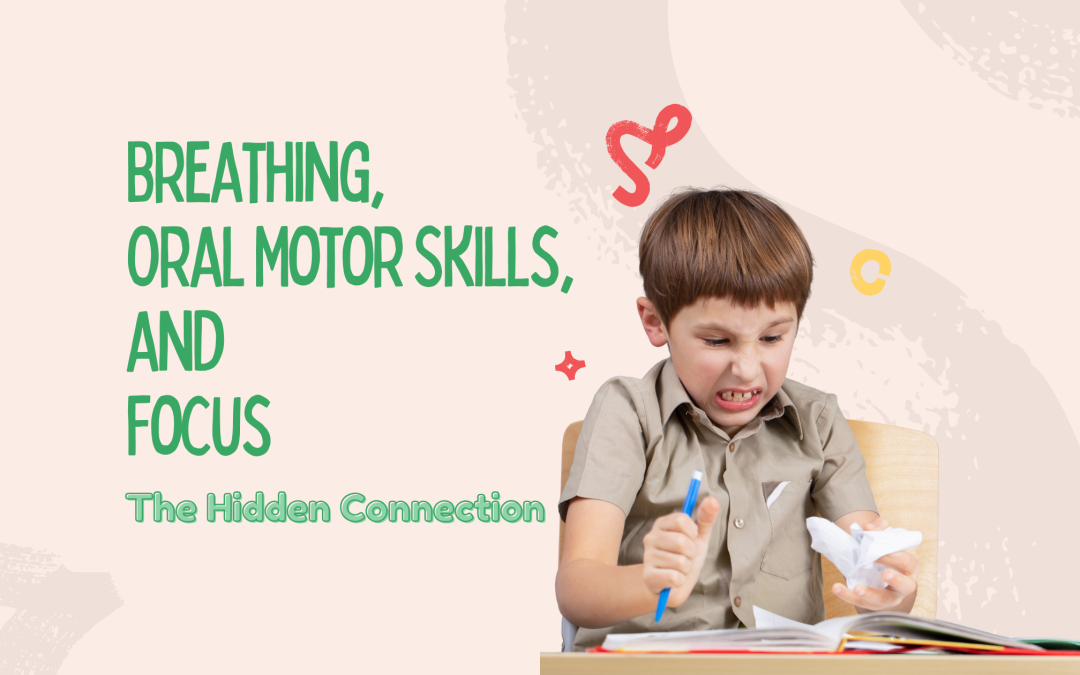
As parents, we often connect focus and attention challenges with school readiness, learning styles, or behavior. But what if your child’s difficulty sitting still, paying attention, or staying energized during the school day has more to do with how they breathe or use their oral motor muscles than you realize?
As speech, feeding, and myofunctional therapists, we often see that breathing patterns and oral motor skills play a huge role in a child’s ability to focus, learn, and thrive. With back-to-school season in full swing, it’s important to look beyond the classroom and consider how underlying physical factors may affect your child’s attention.
👃 The Role of Breathing in Focus
Children are meant to be nasal breathers. Breathing through the nose filters, warms, and humidifies air, supplying the brain with optimal oxygen levels. When a child is a chronic mouth breather, oxygen delivery can be less efficient, and this may lead to:
- Daytime fatigue or sluggishness
- Difficulty sustaining attention
- Hyperactivity as a way to “wake up” the brain
- Restless sleep and poor overnight recovery
If your child snores, grinds their teeth, or sleeps with their mouth open, it may be affecting how alert and focused they are during the school day.
👄 Oral Motor Skills and Focus
Oral motor skills don’t just affect eating and speech—they also play a role in posture, breathing, and energy. Weakness or poor coordination in the lips, tongue, and jaw can contribute to:
- Poor chewing and swallowing patterns
- Slouching at the desk due to low muscle tone
- Inefficient breathing, especially during physical activity
- Difficulty staying organized or alert in class
These small muscles are part of bigger systems that support body regulation. When they’re not working efficiently, kids may burn extra energy just to get through basic tasks—leaving less fuel for focus and learning.
🦷 Signs to Watch For
Could your child’s focus challenges be connected to breathing or oral motor skills? Here are some signs worth noticing:
- Frequent mouth breathing (day or night)
- Snoring, teeth grinding, or restless sleep
- Slouching or leaning during seated tasks
- Trouble chewing age-appropriate foods
- Excessive drooling or open-mouth posture
- Low energy or “zoning out” during the school day
🌟 How Therapy Can Help
The good news: these issues can often be improved with the right support. Myofunctional therapy and feeding therapy target the muscles and habits involved in breathing, chewing, and oral posture. Through fun, age-appropriate exercises, kids can learn to:
- Strengthen lips, tongue, and jaw
- Transition from mouth breathing to nasal breathing
- Improve chewing and swallowing patterns
- Build better posture and overall energy regulation
When these systems work more efficiently, children often show improvements in focus, classroom participation, and even confidence.
👩👧 Parent Tip
At home, start by observing your child during both the day and night. Do they keep their mouth open when watching TV, reading, or sleeping? Encourage gentle reminders like “lips together, breathe through your nose.” Pair it with fun activities like blowing bubbles, using a pinwheel, or practicing strong chewing with safe foods. These simple daily habits can make a big difference in supporting focus and overall development
If your child is struggling with focus at school, it’s worth considering more than just academics or behavior. Breathing and oral motor skills are often overlooked, but they can make a huge difference in attention and learning.
This back-to-school season, keep an eye out for the signs—and remember that support is available. Our team is here to evaluate your child’s unique needs and create a personalized plan to help them thrive in and out of the classroom.
📞 Contact us at www.lispeechtherapy.com to learn more or schedule a consultation.