
A Feeding Therapist’s Guide to Stress-Free Holiday Eating
Holiday meals look beautiful on Pinterest…
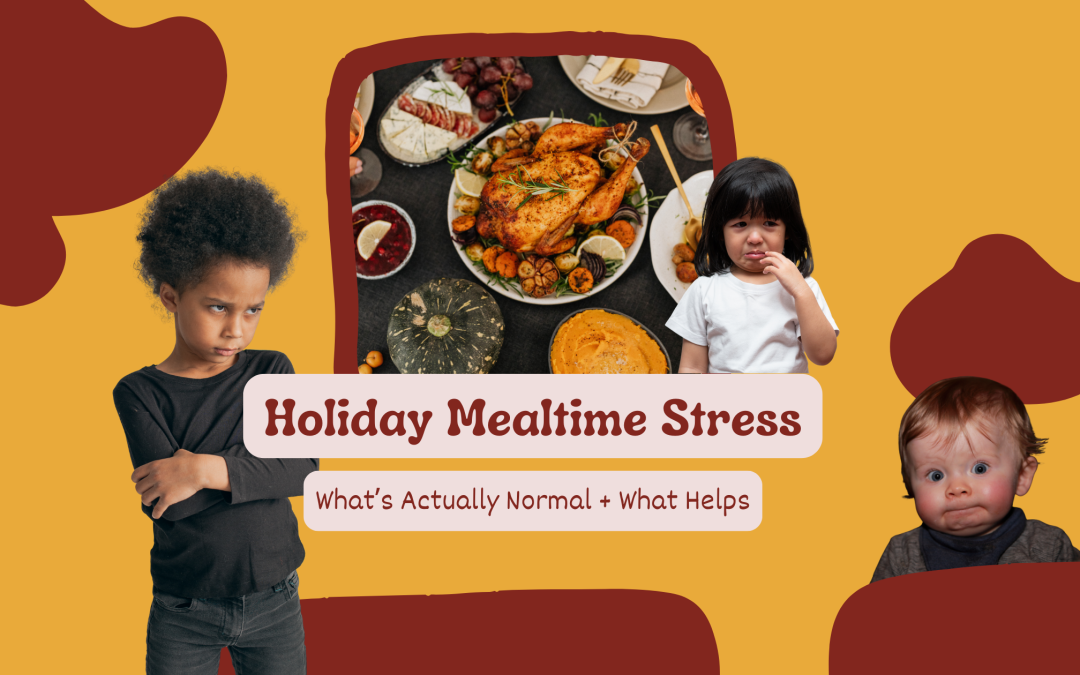
but in real life? Toddlers are crying, food is being launched, and a tiny human is hiding under the table with dinner rolls.
Good news:
This is completely normal.
And better news:
There are REAL, science-backed strategies that can help.
This blog post dives deeper into why holiday meals are so tough, what to expect, and what parents can do to make it calmer, easier, and more enjoyable for everyone — including YOU.
🧠 Why Holiday Meals Are Overwhelming for Toddlers
Children thrive on predictability. Holiday gatherings are basically the opposite of that. Here’s what their nervous system is experiencing:
❶ Sensory Overload
Holidays include:
• loud conversations
• clattering dishes
• strong smells
• new food textures
• bright decorations
• new environments
For a developing nervous system, this is like running a marathon with headlights in your face.
❷ Appetite Suppression from Excitement & Stress
When kids are overwhelmed or overstimulated, the body goes into a mild “fight or flight” state.
Digestion slows down.
Hunger cues get quieter.
This is why they may refuse food they normally eat at home.
❸ Routine Disruptions
Earlier wake-ups, skipped naps, more screen time, travel, visitors…
All of this impacts regulation and eating behaviors.
❹ Pressure From Well-Meaning Family Members
“Just one bite!”
“You love turkey!”
“Aren’t you hungry?”
Pressure activates anxiety, especially in kids with picky eating or sensory sensitivities.
❺ Unfamiliar Foods = Decreased Safety
New smells, new textures, and mixed foods (hello casseroles) feel unpredictable. Kids eat better when the food feels familiar and safe.
🍽️ What’s Normal to See at Holiday Meals?
Parents often feel embarrassed or stressed by their child’s behavior. Let’s normalize what’s common:
• Refusing everything except bread
• Crying or whining at the table
• Wanting to sit on your lap
• Rejecting new or mixed foods
• Touching but not tasting
• Running around or getting up frequently
• Eating only snacks
• Meltdowns from sensory overload
None of this means your child is “bad,” “spoiled,” or “being difficult.”
It means they’re overwhelmed.
✨ Parent Tips: How to Make Holiday Meals Easier (and Less Stressful for YOU)
Here’s where we go deeper. Below are practical, therapist-approved strategies you can use before, during, and after the meal.
🍂 BEFORE THE MEAL: Set Your Child Up for Success
1. Show pictures & talk through the plan
Children do better when they know:
• where you’re going
• who will be there
• what the environment looks like
• what foods might be offered
Predictability = safety.
2. Pack backup “safe foods”
This gives comfort and confidence.
It’s not catering — it’s supporting.
Examples:
✔️ crackers
✔️ fruit
✔️ yogurt pouch
✔️ bread
✔️ preferred proteins
3. Use a “sensory toolkit”
Throw a few items in your bag:
• chew necklace
• fidget toy
• noise-reducing headphones
• straw cup
• familiar utensils
• wipes
• extra shirt
These regulate the nervous system faster than you think.
🍂 DURING THE MEAL: Support Their Nervous System
4. Serve tiny portions
This signals: “You don’t have to eat everything.”
It feels safer, more manageable, less overwhelming.
5. Keep at least 1–2 familiar foods on the plate
Even if the rest is new. This helps your child feel grounded.
6. Allow exploration without expectation
Touching, smelling, poking, licking = participation.
We call this “food chaining.”
Exploration is a win — eating comes later.
7. Offer movement breaks
Movement resets the body. Try:
• walking to another room
• stretching
• deep breaths
• going outdoors briefly
• sitting on your lap for reassurance
Instead of insisting “Sit still!” think:
regulated body = better participation.
8. Keep the pressure OFF
No:
🚫 “Just one bite”
🚫 “Try it for me”
🚫 “You loved this last year!”
🚫 “You can play after you eat”
Pressure increases anxiety → anxiety decreases eating.
9. Choose seating that works for your child
Your lap, a booster, a regular chair… it’s ALL okay.
Holiday expectations don’t override developmental needs.
🍂 AFTER THE MEAL: Build Connection, Not Conflict
10. Validate their experience
“You did a great job exploring.”
“I know that room was loud.”
“You listened to your body.”
Validation builds trust.
11. Don’t overanalyze one meal
Holiday meals are NOT the time to measure progress.
One day does not define feeding success.
12. Model gratitude and flexibility
Kids learn how to cope by watching you.
When you’re calm and flexible, they feel safer.
🧡 Bonus Section: Scripts to Use With Family Members
For the brave parents dealing with unsolicited comments 👇
If someone pressures your child:
“We follow a no-pressure approach to support healthy eating. Thanks for understanding!”
If someone comments on what your child should eat:
“They’re learning at their own pace. Today is about connection.”
If someone questions why you packed food:
“Kids eat best when they feel safe, so familiar foods help them enjoy the holiday.”
These scripts protect your child — without starting a family argument.
Your child isn’t giving you a hard time — they’re having a hard time.
And holiday environments are A LOT for little nervous systems.
With preparation, realistic expectations, and a low-pressure approach, holiday meals can be gentler, calmer, and more connected.
You’re doing an incredible job supporting your child. 💛
If your child struggles regularly with:
• extreme picky eating
• difficulty expanding textures
• sensory challenges
• mealtime battles
• stress around eating
…our feeding team is here to help. Supporting families is what we do best.