

The holidays are such a special time for families—and one of the questions we get asked the most is:
“What toys do you actually recommend?”
As speech, feeding, and myofunctional therapists, we’re always thinking beyond just fun. The best toys are the ones that support language development, motor skills, problem-solving, and play—all while feeling natural and joyful for kids.
Below is our therapist-approved holiday toy guide, broken down by age, with simple tips on how parents can use each toy to support development at home. We’ll be linking our favorites so you can easily shop with confidence.
👶 Baby Toys (0–12 months)
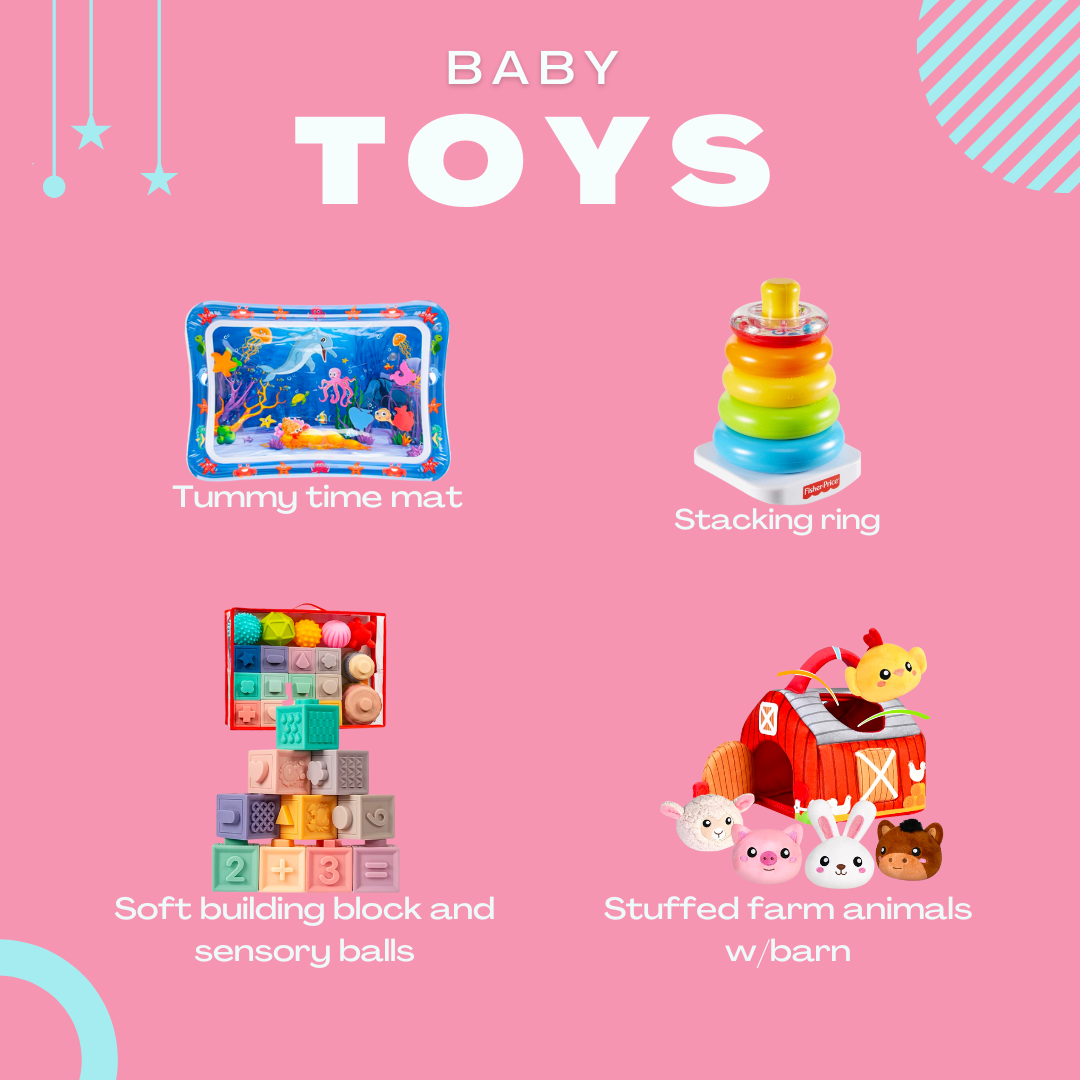
Tummy Time Mat
Why we love it:
Supports core strength, head control, and early postural stability—all foundational for feeding, speech, and breathing.
How to use it:
-
Get down at eye level and talk, sing, or make silly faces
-
Place toys slightly to the side to encourage head turning
-
Short, frequent tummy time sessions count!
Stacking Rings
Why we love them:
Build fine motor skills, early problem-solving, and hand-eye coordination.
How to use it:
-
Label colors and sizes (“big ring,” “small ring”)
-
Model simple words like “up,” “on,” and “off”
-
Let your baby mouth and explore—it’s part of learning!
Soft Building Blocks
Why we love them:
Encourage grasping, visual attention, and early cause-and-effect play.
How to use it:
-
Stack and knock them down together
-
Use simple language (“boom!” “fall!”)
-
Name pictures, animals, or numbers on the blocks
Stuffed Farm Animals
Why we love them:
Perfect for early sound play, sensory input, and emotional connection.
How to use it:
-
Model animal sounds (“moo,” “baa”)
-
Use simple phrases (“cow eat,” “pig sleep”)
-
Sing songs like Old MacDonald
🧸 Toddler Toys (1–3 years)
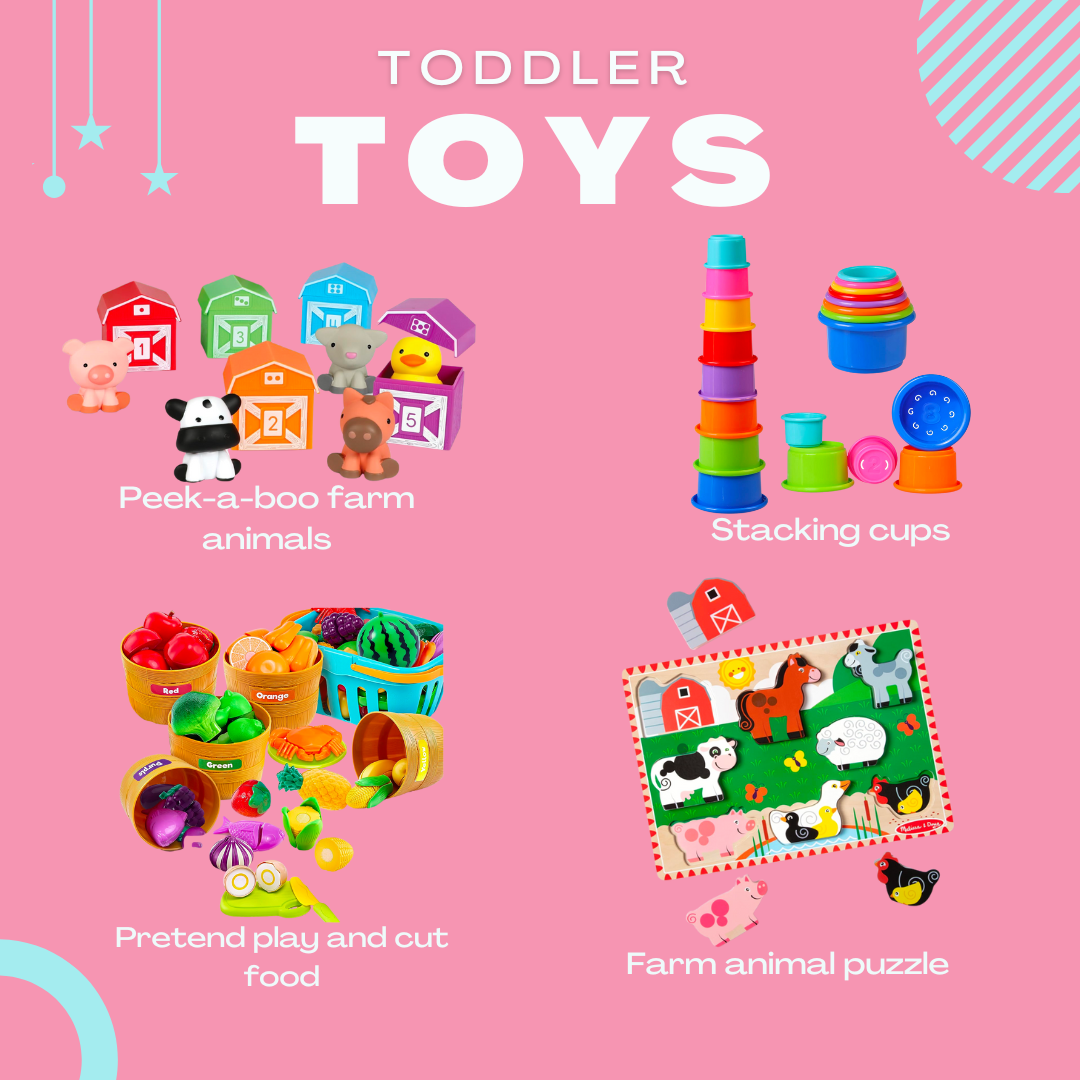
Peek-A-Boo Farm Animals
Why we love them:
Build anticipation, turn-taking, and expressive language.
How to use it:
-
Pause and wait before revealing the animal
-
Encourage your child to label or imitate sounds
-
Use phrases like “ready… set… GO!”
Stacking Cups
Why we love them:
Support sequencing, problem-solving, and early pretend play.
How to use it:
-
Stack, nest, pour, and knock down
-
Count cups as you stack
-
Use bath time for extra fun and repetition
Pretend Play Food
Why we love it:
Supports feeding confidence, vocabulary, and imitation skills.
How to use it:
-
Model eating actions (“bite,” “chew,” “drink”)
-
Offer choices (“apple or banana?”)
-
Pretend to cook, serve, and clean up together
Farm Animal Puzzle
Why we love it:
Great for vocabulary, matching, and problem-solving.
How to use it:
-
Label animals and sounds
-
Use simple directions (“find the cow”)
-
Celebrate effort—not perfection
🎨 Preschool Toys (3–5 years)
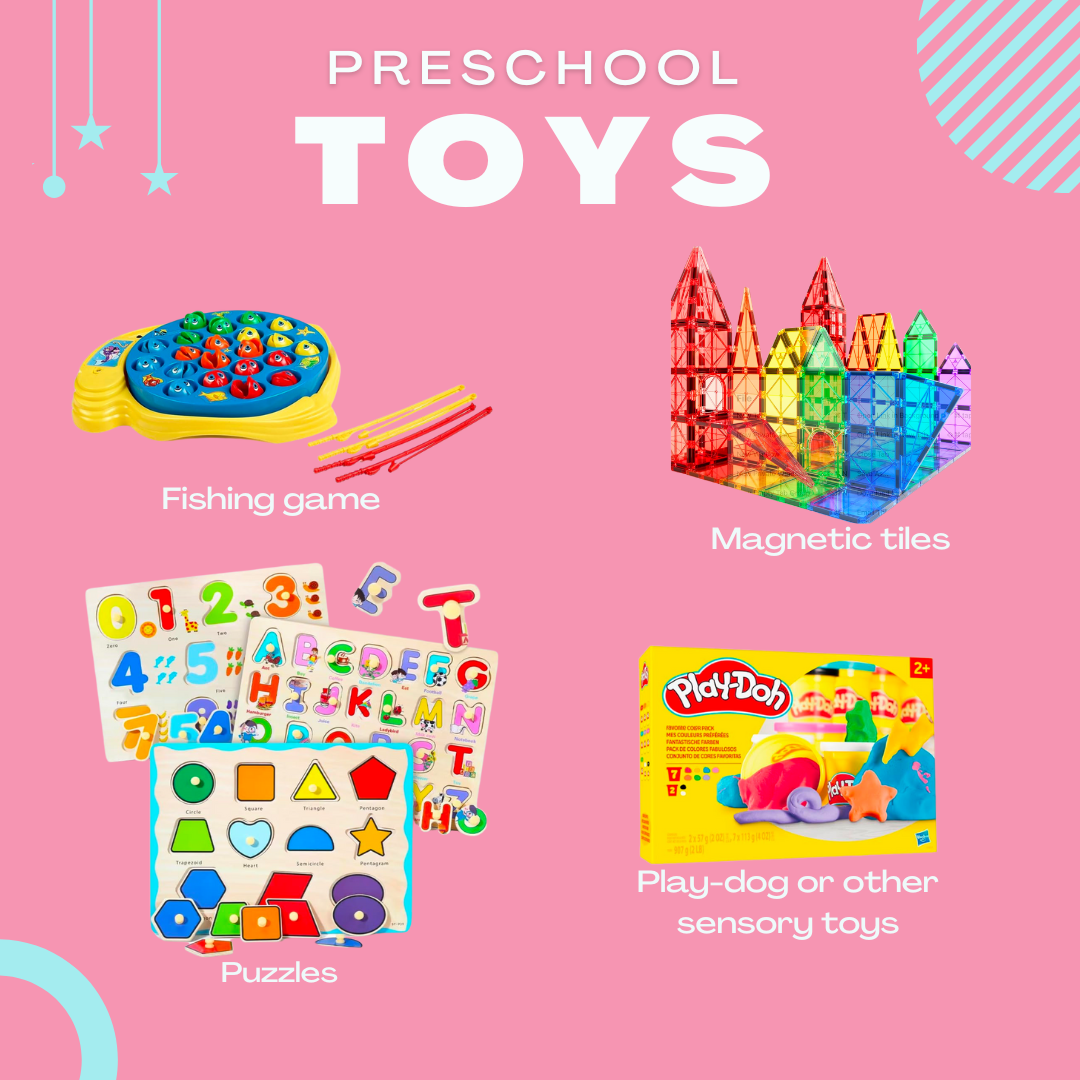
Fishing Game
Why we love it:
Builds attention, hand-eye coordination, and turn-taking.
How to use it:
-
Take turns and practice waiting
-
Count fish or name colors
-
Use phrases like “my turn,” “your turn”
Magnetic Tiles
Why we love them:
Encourage creativity, spatial awareness, and early STEM thinking.
How to use it:
-
Build together and narrate actions
-
Introduce concepts like “tall,” “flat,” “fall”
-
Encourage your child to explain what they built
Wooden Puzzles (Variety Levels)
Why we love them:
Support problem-solving, attention, and language expansion.
How to use it:
-
Start easy and work up
-
Ask open-ended questions (“Where does this go?”)
-
Use descriptive language (“corner,” “edge”)
Play-Doh & Sensory Toys/Bins
Why we love them:
Strengthen hand muscles, support sensory regulation, and encourage creativity.
How to use it:
-
Roll, pinch, and squish together
-
Hide small toys to find
-
Pair with language (“soft,” “sticky,” “roll it”)
You don’t need dozens of toys—you need intention.
The most powerful part of play is you: talking, modeling, waiting, and responding.
These toys work best when they’re:
-
Repetitive
-
Interactive
-
Pressure-free
-
Fun for both child and adult
We’ll be linking all of our favorite holiday toys so you can shop with confidence and know you’re choosing items that truly support development.
💬 If you’re not sure which toys are right for your child—or want guidance tailored to their needs—our team is always here to help.