
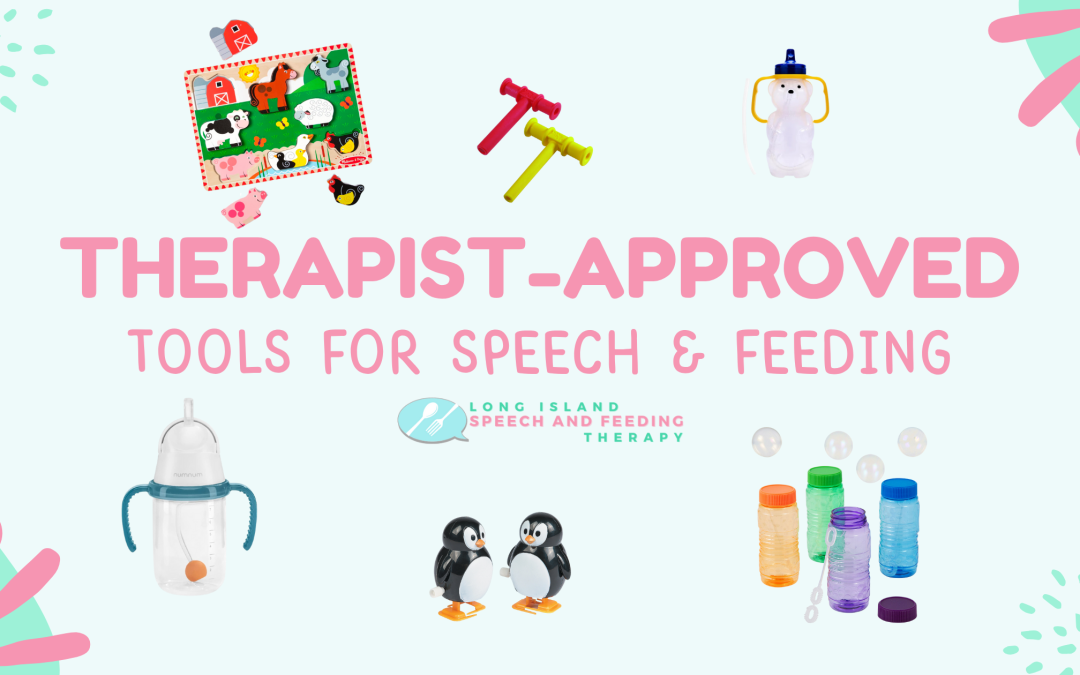
When parents ask us what toys and tools are best for helping with speech, feeding, or oral motor development, we always say this: purposeful doesn’t have to mean complicated.
As speech and feeding therapists, we look for items that are engaging, easy to use, and designed to support developmental goals. Whether you’re working on first words, strengthening oral muscles, or building language through play, here are some of the tools and toys we actually use in therapy—and why they work so well!
**This page features affiliate links, which means that we may earn a commission on qualifying purchases made through these links. Thank you for your support!**
1. Bubbles
Why we love them: Great for breath support, lip rounding, and turn-taking. We also use them to encourage early words like “pop!” or “more.”
Therapist tip: Blow bubbles and pause—wait for your child to request more verbally or with a gesture. Perfect for building communication naturally. Bubbles
2. Wind-Up Toys
Why we love them: They motivate communication and teach cause-and-effect. Great for practicing words like “go,” “again,” and “stop.”
Therapist tip: Hold the toy and wait. Let your child initiate interaction or make a sound to activate the toy again. Great for joint attention! Check out these toys
3. Straw Cups & Blowing Tools
Why we love them: Straw drinking strengthens oral motor coordination, encourages lip seal, and promotes nasal breathing. Blowing through straws or cotton balls adds a fun twist.
Therapist tip: Use a Honey Bear cup or pinwheel to work on breath control and lip closure. Check out NumNum Straw Cup, GROSMIMI Cup, Bear Straw Cup
4. Pretend Food & Toy Kitchens
Why we love them: Encourage pretend play, vocabulary building, turn-taking, and sequencing.
Therapist tip: Set up a pretend picnic or ice cream shop and introduce new vocabulary like “scoop,” “pour,” or “serve.” Check out Wooden Play Food, Farmer’s Market Color Sorting Food Set
5. Chewy Tubes & Oral Motor Tools
Why we love them: Used for strengthening the jaw, improving chewing skills, and increasing oral awareness—especially for kids with low tone or feeding challenges.
Therapist tip: Always use under guidance of a therapist! Start with soft resistance and work up based on your child’s needs. Check out Yellow Chewy Tubes, TalkTools Chewy Tubes
6. Simple Puzzles with Animal or Vehicle Sounds
Why we love them: Encourage labeling, sound imitation, and problem-solving. The repetition helps reinforce early speech sounds.
Therapist tip: Use animal puzzles to model sounds like “moo,” “baa,” or “vroom.” Don’t worry about perfect words—sound play counts! Check out Farm Puzzle, Animal Sound Puzzle, Wheels on the Bus
7. Mirrors
Why we love them: Help kids see how their mouth moves when making sounds or eating. Mirrors support self-awareness, imitation, and coordination.
Therapist tip: Make silly faces together or try matching tongue and lip movements.
8. Books with Repetition and Rhyme
Why we love them: Boost vocabulary, early literacy skills, and turn-taking. Repetitive phrases encourage participation.
Therapist tip: Use books like Brown Bear, Brown Bear or Dear Zoo and pause to let your child fill in the last word.
These tools may seem simple, but they’re powerful when used with intention. You don’t need expensive or flashy toys to make progress—just consistency, play, and connection.
Want more guidance on what tools might help your child? Our team is here to help! Reach out at www.lispeechtherapy.com for personalized recommendations or to schedule a consultation.